

Iran protests latest: Internet blackout continues as Ayatollah threatens harsher crackdown

 Close
CloseIran’s near-total internet blackout continued on Saturday as the country’s supreme leader warned of a harsher crackdown on a growing wave of protests.
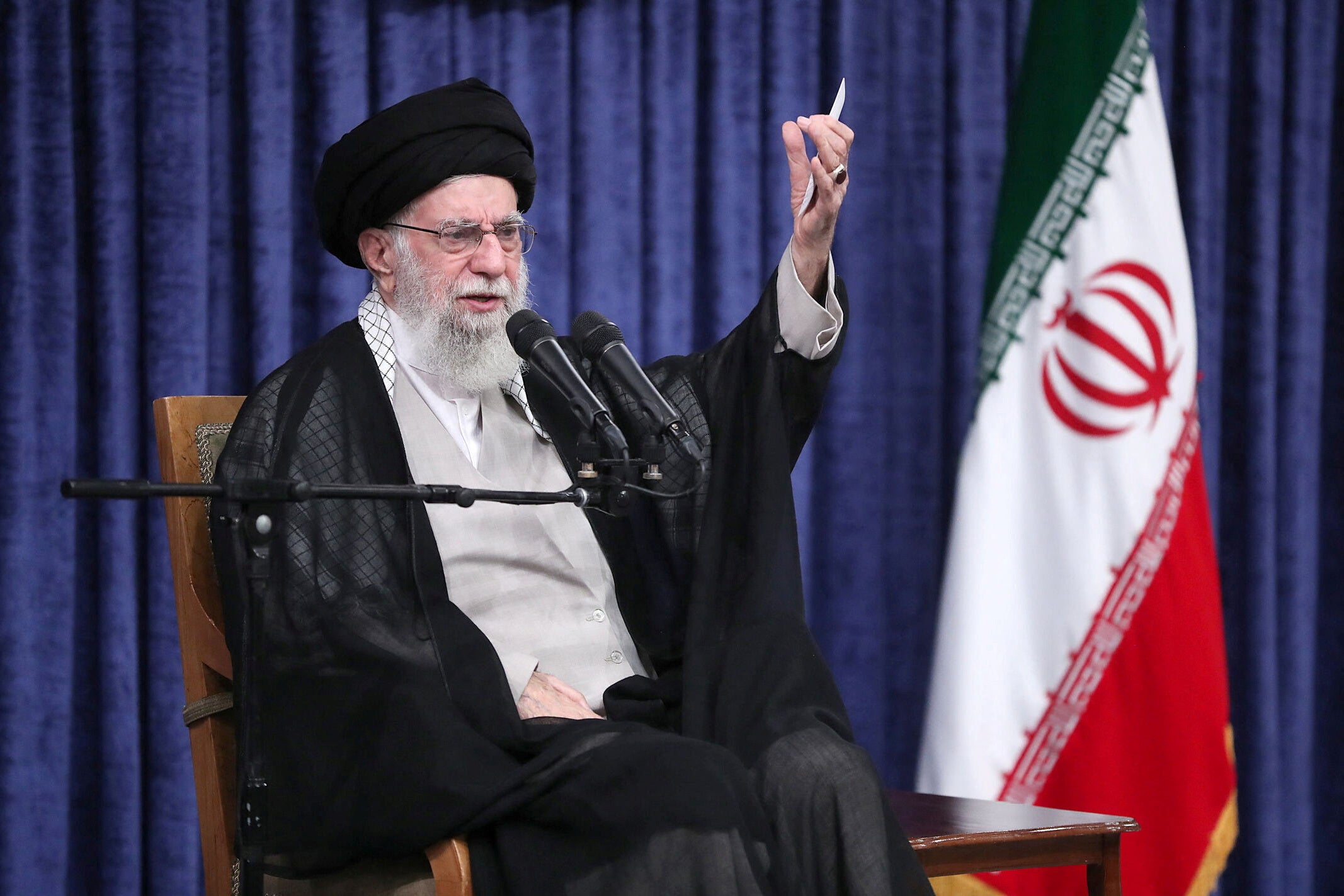
In his first public address since demonstrations began on 28 December, Ayatollah Ali Khamenei said the Islamic Republic would “not back down”, accusing protesters of acting on behalf of foreign powers and blaming US president Donald Trump for unrest driven by Iran’s economic crisis.
Trump warned Khamenei that the US will “start shooting” if demonstrators in Iran are targeted by government forces as nationwide protests demanding regime change continued into their 13th day.
At least 62 people have been killed since the protests began, according to the Human Rights Activist News Agency (HRANA), which said the dead included 48 protesters and 14 security personnel.
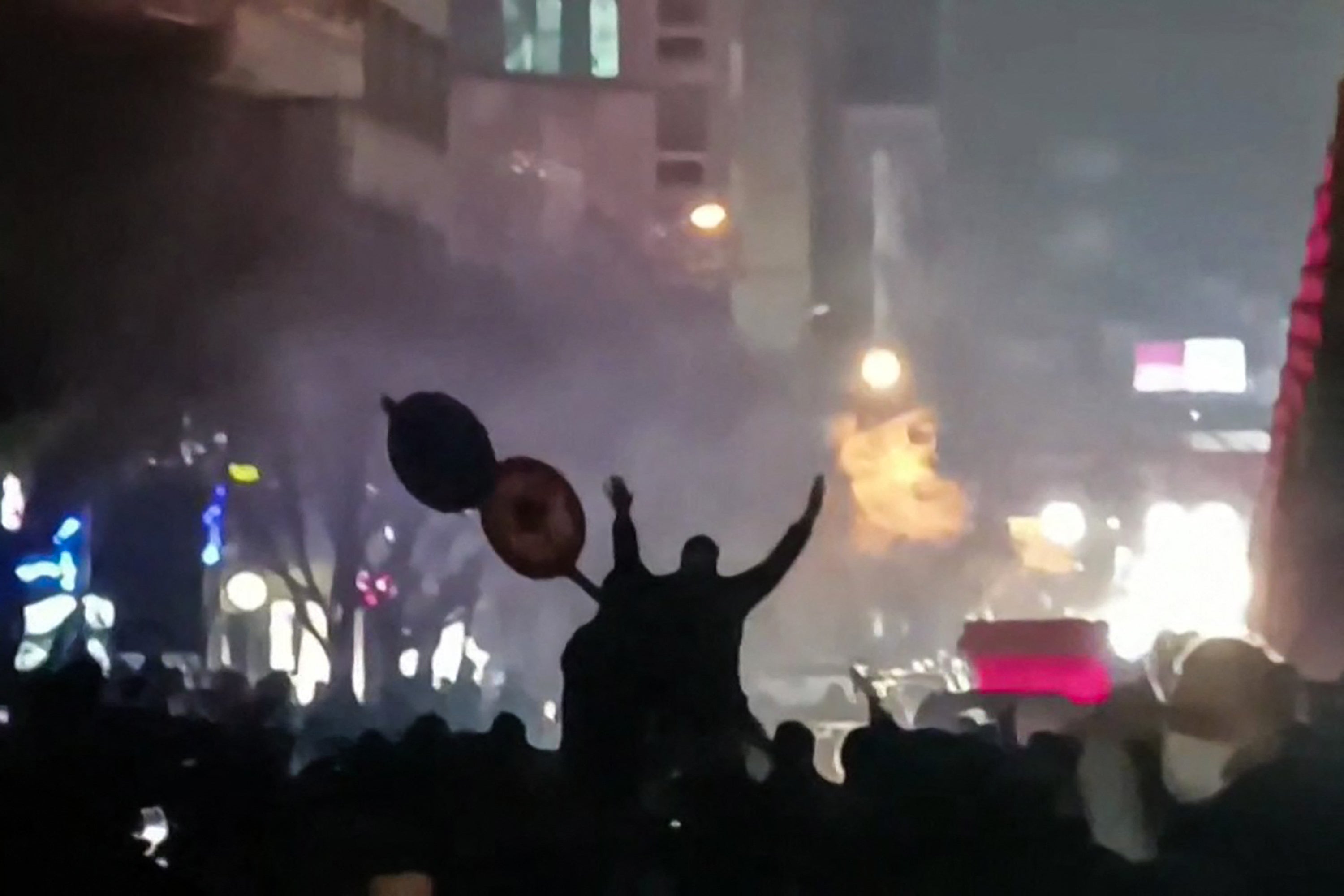
Protesters have chanted “death to Khamenei” in cities across the country, including after calls by the son of the toppled former leader Shah Reza Pahlavi for Iranians to take to the streets. Authorities have maintained a nationwide internet shutdown, severely restricting information flowing out of the country.
Khamenei said demonstrators were “ruining their own streets” to please foreign leaders.
Rights groups say Iran’s internet blackout hides abuses
Several rights and press freedom organisations have condemned Iran’s ongoing nationwide internet blackout amid protests, saying it violates fundamental rights and hinders independent reporting.
Rebecca White, a researcher at Amnesty’s Security Lab, said: “The Iranian authorities have once again deliberately blocked internet access inside Iran to hide the true extent of the grave human rights violations and crimes under international law they are carrying out..This blanket internet shutdown not only hides human rights violations but amounts to a serious human rights violation in itself.”
Reporters Without Borders (RSF) expressed “deep concern” for Iranian journalists, citing the nationwide blackout, threats against reporters and recent arrests.
“This increasingly intimidating climate cannot be tolerated,” Jonathan Dagher, head of RSF’s Middle East desk said, calling for the immediate restoration of telecommunications and the release of 24 detained journalists.
Shahana Yasmin10 January 2026 05:50
What you need to know about the protests in Iran
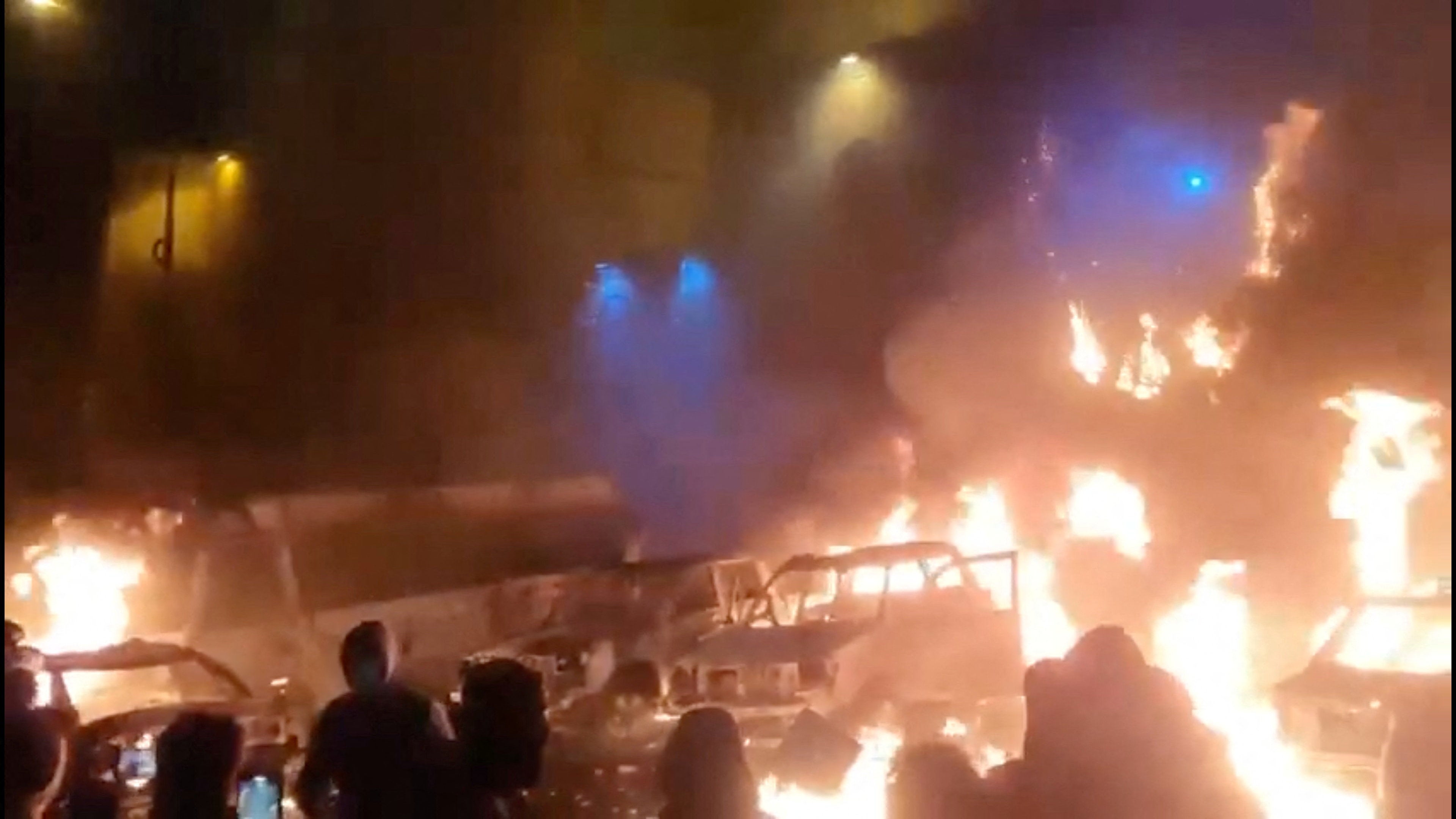
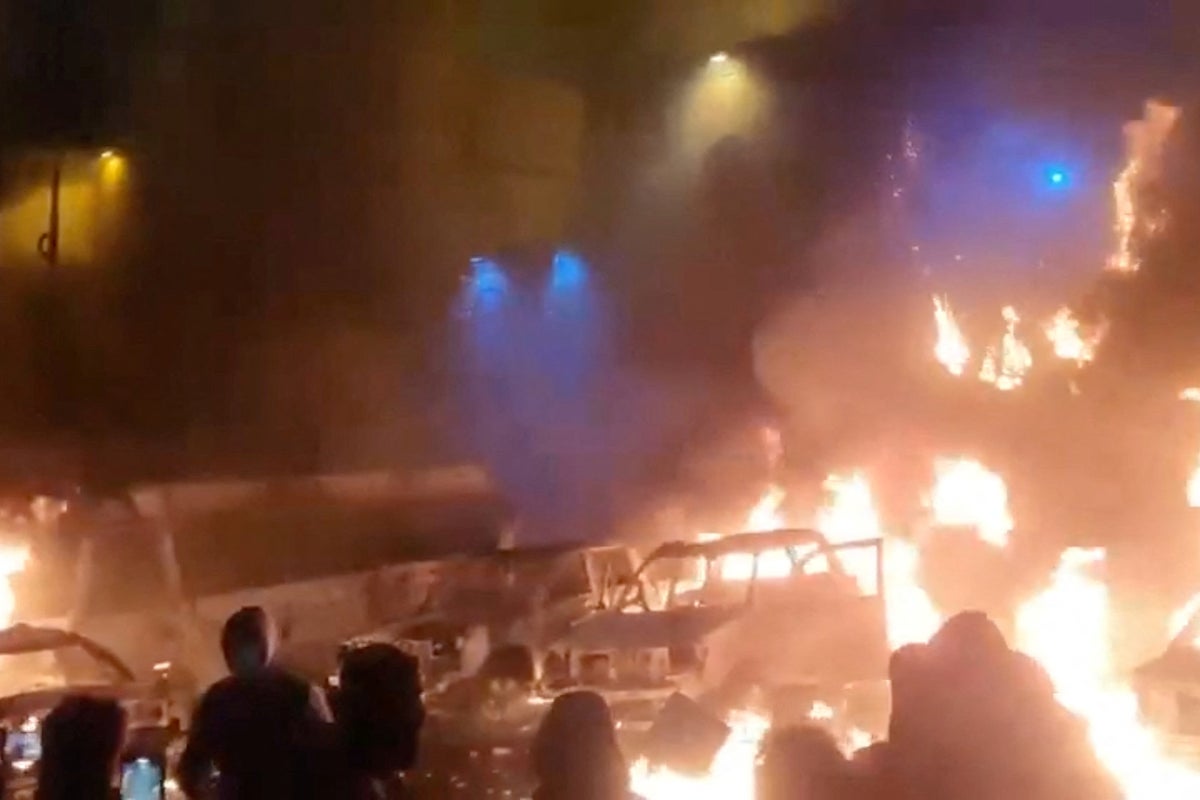
Buildings, buses, and shops have been burned to the ground turning Iran’s capital Tehran into a “war zone” as protests break out across the country demanding the fall of the country’s supreme leader ayatollah Ali Khameini.
This unrest follows a tumultuous period for Tehran, which is still recovering from a 12-day conflict in June, initiated by Israel, that saw US forces bomb Iranian nuclear facilities.
Here’s what to know about the protests and the challenges facing Iran’s government.
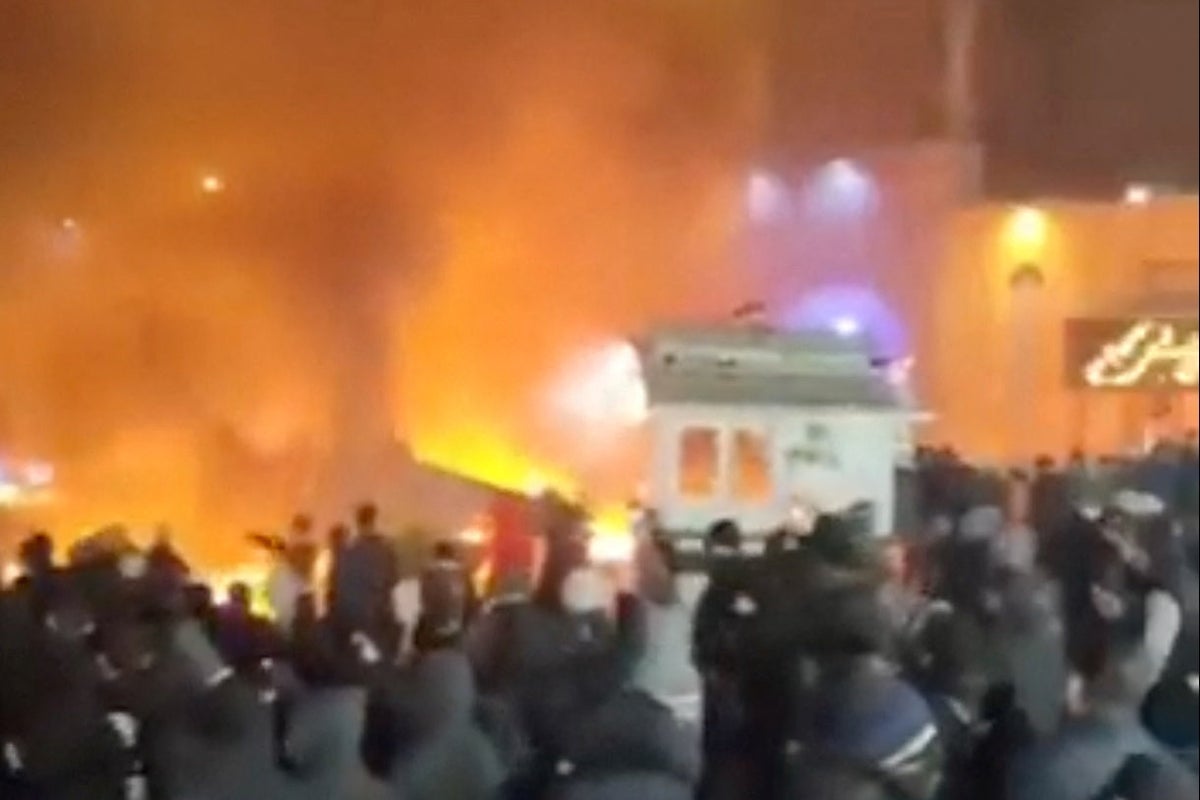
What is happening in Iran? Internet blackout and Israel blamed after mass protests
Trump threatens new attack over Tehran’s protest crackdown, after US forces bombed nuclear facilities last yearShahana Yasmin10 January 2026 05:00
X appears to switch Iran flag emoji to pre-revolution design
X appears to have changed Iran’s flag emoji to a pre-revolution version, replacing the current Islamic Republic emblem with the former lion-and-sun symbol.
The change follows a post by X’s head of product Nikita Bier, who said on Thursday he was working on the update after a user request. By Friday evening, the change appeared to be live, with some official Iranian government accounts, including the Iranian Ministry of Foreign Affairs, displaying the old flag as a result.
The pre-1979 flag features green, white, and red horizontal stripes with a lion-and-sun emblem, popular among sections of the Iranian diaspora opposed to clerical rule.
After the 1979 revolution, Iran replaced the symbol with a new coat of arms and added the words “Allahu Akbar” inscription to the flag.
Shahana Yasmin10 January 2026 04:45
Who is Iran’s supreme leader, Ayatollah Ali Khamenei?
Ayatollah Ali Khamenei has been Iran’s Supreme Leader since 1989, making him the most powerful figure in the Islamic Republic. He succeeded Ruhollah Khomeini amid doubts about his religious standing and authority.
Over more than three decades, he has reshaped the Islamic Republic by shifting power away from elected institutions and towards unelected bodies controlled by loyal clerics, effectively placing key decision-making authority in the office of the Supreme Leader.
He oversaw the rise of the Islamic Revolutionary Guard Corps into the dominant force in Iran’s security, politics and economy, granting it broad autonomy in exchange for loyalty.
Khamenei has repeatedly relied on the Guard and other security agencies to suppress challenges to his rule, including major protest movements in 2009, 2017, 2019 and 2022.
Shahana Yasmin10 January 2026 04:30
Trump saying US watching "pretty incredible" Iran protests "very closely"
Shahana Yasmin10 January 2026 04:15
'Protests may calm down, but won't be extinguished'
Commenting on the situation in Iran, Professor Maziyar Ghiabi, Director of the Centre for Persian and Iranian Studies at the University of Exeter, said:
“The protestors are maintaining their momentum in what is the largest nationwide event of the past decade. Iranian state officials have been uncompromising.
“It is likely the protests will calm down. But given the social and economic conditions, and the buildup of anger, it is hard to think that state force and repression would extinguish them.”
James Reynolds10 January 2026 04:00
A timeline of how the protests in Iran unfolded and grew
Demonstrations broke out in Iran on 28 December and have spread nationwide as protesters vent their increasing discontent over the Islamic Republic's faltering economy and the collapse of its currency.
While the initial focus had been on issues like spikes in the prices of food staples and the country's staggering annual inflation rate, protesters have now begun chanting anti-government statements as well.
A timeline of how the protests in Iran unfolded and grew
Demonstrations broke out in Iran on Dec. 28 and have spread nationwide as protesters vent their increasing discontent over the Islamic Republic’s faltering economy and the collapse of its currencyShahana Yasmin10 January 2026 03:45
Internet blackout continues as unrest spreads across Iran
Iran’s near-total internet blackout continued as protests spread across cities, sharply limiting the flow of information out of the country.
Internet monitoring group NetBlocks said internet connectivity remained cut across multiple service providers nationwide.
Iran’s Ministry of Information and Communications Technology said the shutdown was ordered “by the competent security authorities under the prevailing circumstances of the country”.
The blackout has also disrupted travel links. At least 17 flights between Dubai and Iran were cancelled, according to Dubai Airport’s website.
Shahana Yasmin10 January 2026 03:30
Iran’s Supreme Leader threatens crackdown as protests escalate
Ayatollah Ali Khamenei has threatened that Iranian authorities will not back down in the face of a rapidly growing protest movement.
In his first public remarks since protests began on 28 December, Khamenei described demonstrators as “vandals” and “saboteurs”, accusing them of acting on behalf of foreign powers.
“The Islamic Republic came to power through the blood of hundreds of thousands of honourable people. It will not back down in the face of vandals,” he said
He claimed that protesters were “ruining their own streets” to please foreign leaders, including former US president Donald Trump, who has threatened American intervention if protesters are killed.
Shahana Yasmin10 January 2026 03:15
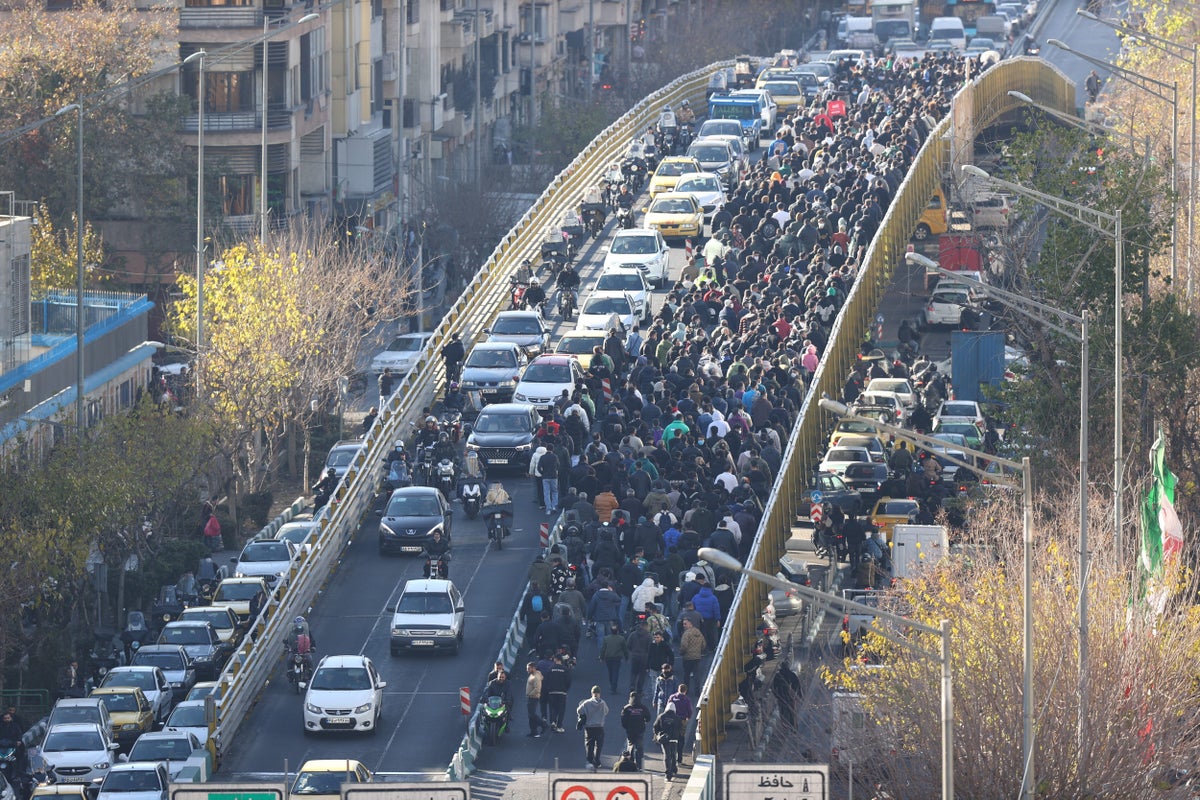
Pictured: Demonstrators march on Tehran