Less than 12 hours after claiming Iran had accepted most of his purported 15-point plan to end the month-old American-Israeli war he started, President Donald Trump is renewing his threats to attack Tehran’s civilian infrastructure if the Iranian regime does not agree to reopen the Strait of Hormuz.
In a Monday Truth Social post, Trump said there’d been “great progress” in “serious discussions” with what he described as the “new and more reasonable regime” in Tehran but warned of more bombings if it falls apart.
“If for any reason a deal is not shortly reached, which it probably will be, and if the Hormuz Strait is not immediately ‘Open for Business,’ we will conclude our lovely “stay” in Iran by blowing up and completely obliterating all of their Electric Generating Plants, Oil Wells and Kharg Island (and possibly all desalinization plants!), which we have purposefully not yet ‘touched,’” the president wrote.
“This will be in retribution for our many soldiers, and others, that Iran has butchered and killed over the old Regime’s 47-year ‘Reign of Terror,’” he added.
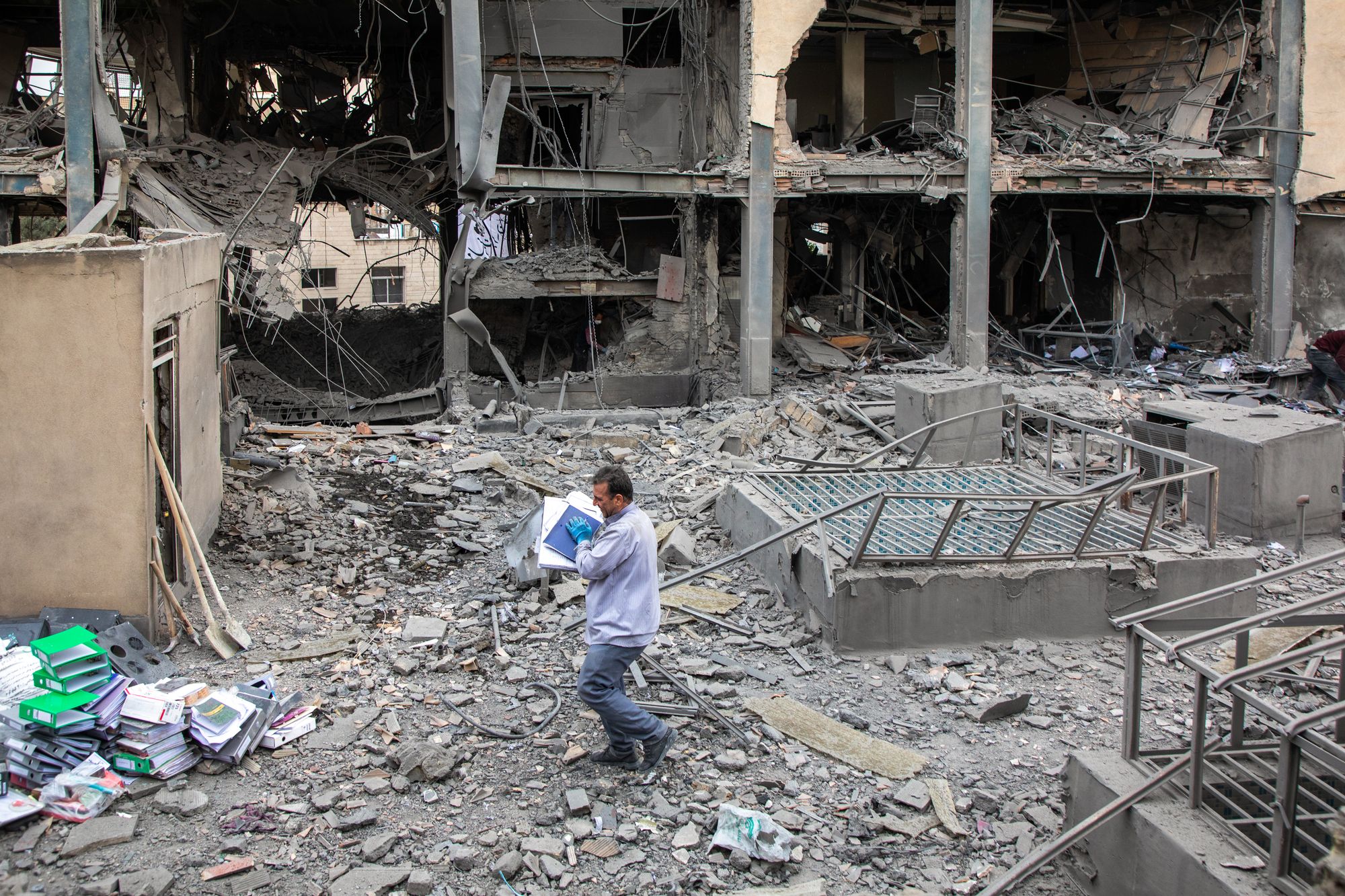
The president’s extraordinary threat to attack Iran’s power and water systems — attacks that would almost certainly violate the Fourth Geneva Convention’s prohibitions against targeting civilian infrastructure necessary for a population’s survival — comes exactly one week after he backed off a prior threat to target Tehran’s electrical generation capacity while citing what he described as “productive conversations” with Tehran even as Iranian government officials denied that any such talks had taken place.
 open image in gallery
Trump has repeatedly claimed there has been progress towards an agreement to end the war, which is entering its second month, even as Tehran has denied any direct talks with Washington since the start of the air campaign.
Iranian state media has also reported that the government has rejected the purported peace plan as “unrealistic, illogical and excessive.”
Trump is also understood to be considering plans to launch a high-stakes ground operation to seize Iran’s enriched uranium stockpiles from deep within the country at sites he has repeatedly claimed to have “obliterated,” both in a series of airstrikes by B-2 stealth bombers last June and during the current war that he launched on February 28.
Thousands of American ground forces from the Army and Marine Corps have arrived in the region, and Trump has told the Financial Times that he wants to “take the oil in Iran” and potentially use American troops to seize the tiny Kharg Island, the country’s main oil exporting terminal.
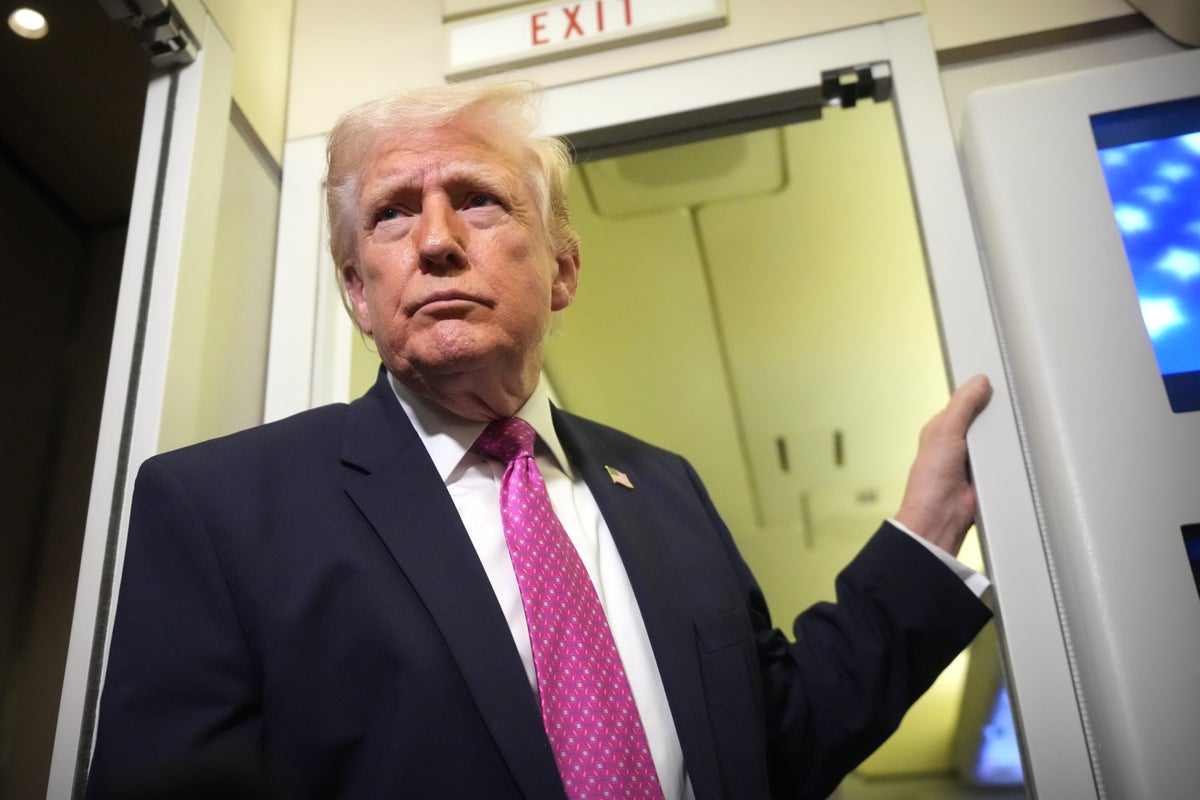
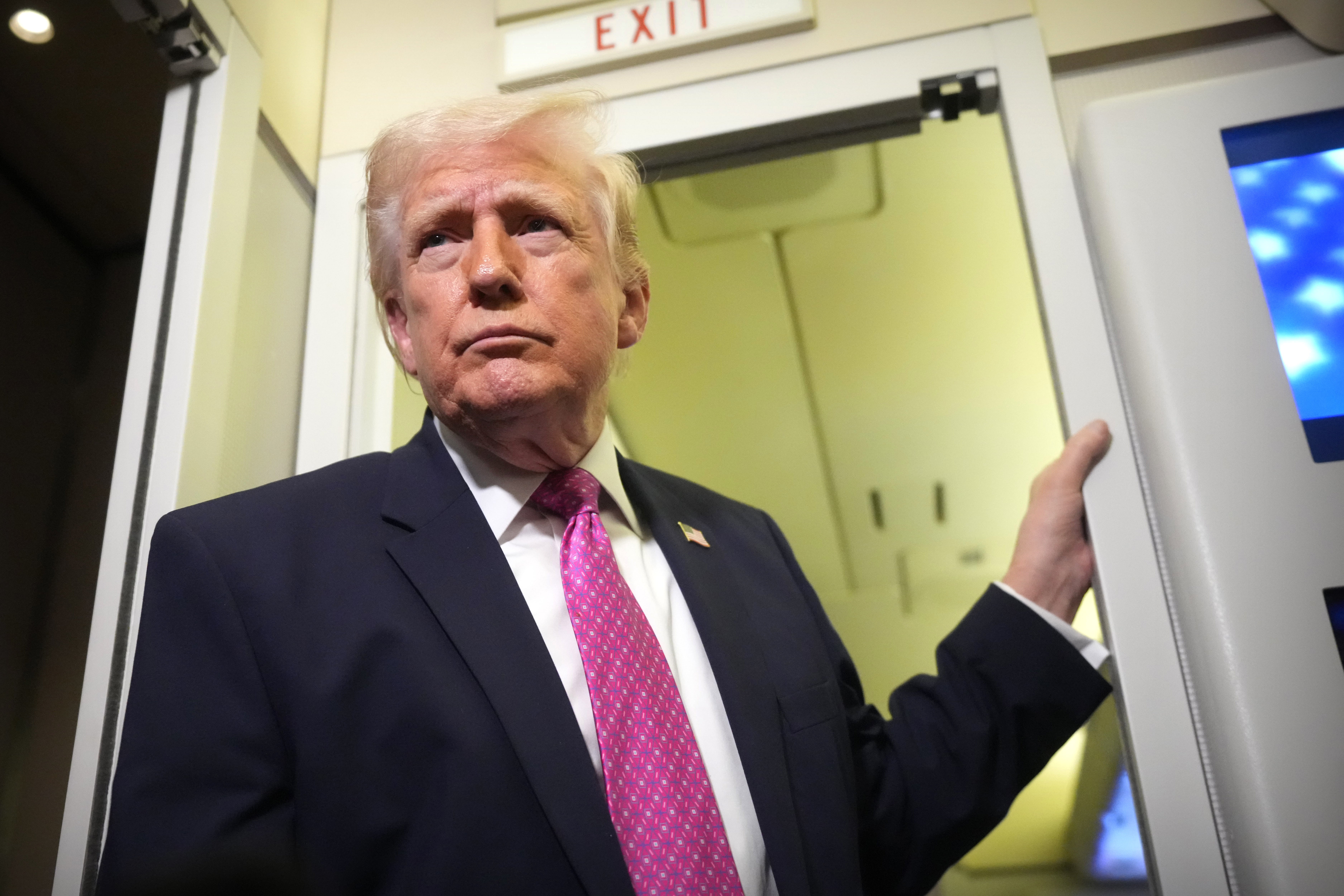
On Sunday, he told reporters aboard Air Force One that the Iranian military had been “decimated” and suggested that Tehran had agreed to “give up nuclear weapons” and “give us the nuclear dust,” referring to the weapons-grade nuclear materials.
He also expressed optimism about the same talks which Iran’s government has denied taking part in while boasting that the month-long bombing campaign had brought about “regime change” by killing most of the country’s previous leadership.
“I think we'll make a deal with them, pretty sure, but it's possible we won't, but we've had regime change, if you look already, because the one regime was decimated, destroyed, they're all dead,” he said.
“They're going to do everything that we want to do. If they don't do that, they're not going to have a country,” he added.
 open image in gallery
Seizing Iran’s uranium would entail a complex operation involving American troops flying to nuclear sites while under fire from Iranian forces.
Combat troops would need to secure the perimeters of the sites, supported by highly-skilled technical staff and engineers on board to extract the radioactive material. This would need to be carried in around 40 to 50 special cylinders to be transported out of the country without incident.
They would also need to assess the territory for mines and other explosive devices designed to ward off security breaches.
Tehran has warned against a ground invasion and said Trump is leading U.S. troops into “the swamp of death,” while even members of Trump’s own Republican Party have cautioned him against deploying ground forces into the country.
One GOP congressman, Rep. Tim Burchett of Minnesota, said Sunday that “a lot of Republicans” would not support that level of escalation in the month-old conflict.
He told the television network NewsNation that he did not think there was “a will for a ground conflict between American and Iran” while noting that such a development would face united opposition from Democrats in Congress in addition to a critical mass of Republicans.
Burchett also said he believed a ground invasion would be a “red line” for the GOP.
Another Republican lawmaker, Senator James Lankford of Oklahoma, cautioned that Trump would have to ensure that Congress is fully informed on what any ground troops would be doing and why.
Speaking Sunday on NBC News’ Meet the Press, Lankford said: “We’ve got to be able to know what the objectives are and what they’re actually carrying out.”
“If this is special forces to be able to carry out a specific operation – get in, get out – that’s very different than longstanding occupation,” he said. “The worst thing that can happen is to be able to have this kind of conflict start and to not end it, to leave it undone.”