


From Iraq to Yemen: How Iran-linked groups are putting Saudi energy routes under pressure
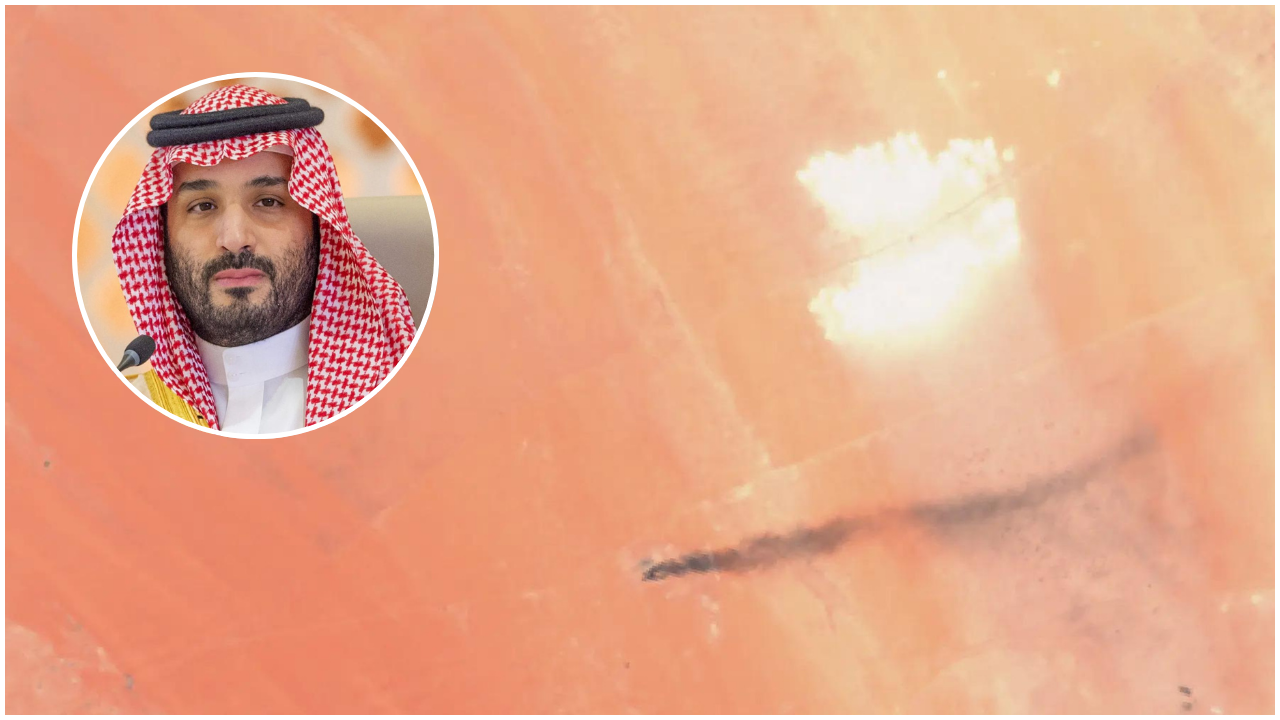
 A satellite image shows smoke rising from area near East-West oil pipeline, in Eastern Province, Saudi Arabia (Picture credit: Reuters) Saudi Arabia on Saturday has temporarily shut down its East-West oil pipeline after a drone attack on the vital energy conduit, in an escalation that has put further pressure on Iraq and raised fresh concerns over disruptions to global oil supplies.Saudi Arabia and Iraq have said the drones originated from Iraqi territory, where Iran-backed militias operate. Iraq has ordered an investigation and dismissed two senior officials following the attack, while an umbrella group of Iran-backed Iraqi militias has denied responsibility.The developments come as Iran continues to disrupt shipping through the Strait of Hormuz and Iran-backed Houthi rebels in Yemen have advanced along the Red Sea, putting pressure on another major route for global trade.Here is what we know so far.
What happened to Saudi Arabia’s oil pipeline?
Saudi Arabia shut down its 1,200-km East-West pipeline as a precaution after it came under a drone attack.The pipeline runs across the Arabian Peninsula from Saudi Arabia’s major oil fields in the east to the Red Sea in the west. It has been a crucial alternative export route while the Strait of Hormuz has been largely shut during the war.According to Reuters, the pipeline had been transporting around 4 million to 5 million barrels of crude oil per day over the past six months, equivalent to around 4% to 5% of global supply.Satellite images showed black smoke rising from an area of the pipeline south of Medina. The Saudi foreign ministry said the attack caused some injuries and damage, which was being assessed, but did not provide details on the impact on oil exports.There was no immediate claim of responsibility.US President Donald Trump said Iran was “probably” responsible for the attack.
Why is Iraq under pressure?
Both Baghdad and Riyadh said the drones involved in the attack originated in Iraq.Iraq has responded by ordering an investigation into the incident. Prime Minister Ali al-Zaidi ordered an investigation into the operations command in Maysan province, along Iraq’s border with Iran, and dismissed the provincial military commander, according to news agency AP.The provincial police chief was also dismissed.Iraq also closed two key border crossings with Iran, according to Iraq’s state-run news agency, although the move came as authorities investigated the pipeline attack.Maysan is an area near the Iranian frontier where Iran-backed Shiite militias have long maintained influence.An umbrella group of Iran-backed militias in Iraq denied involvement in the Saudi pipeline attack, while praising the Houthis for what it described as their battlefield victories against Saudi forces. The group said it would cooperate with the Iraqi government’s investigation.The attack puts additional pressure on Baghdad, which maintains political and military ties with both the US and Iran.
Why is the pipeline so important?
The East-West pipeline has become particularly important because the Strait of Hormuz has been largely disrupted during the war.The pipeline allows Saudi oil to bypass the Strait of Hormuz and reach the Red Sea, from where crude can be shipped towards Europe through Egypt’s SUMED pipeline and the Suez Canal, or towards Asia through the Bab el-Mandeb Strait and the Indian Ocean.Saudi Arabia had more than doubled oil exports from the Red Sea port at the pipeline’s western end to more than 5 million barrels per day by early June, according to International Energy Agency.The pipeline’s closure therefore removes a major alternative route for Saudi crude exports at a time when other Gulf energy supplies are already facing disruption.Saudi crude supply had fallen to its lowest level in more than three decades, according to the IEA, partly because of attacks on ships transiting the Bab el-Mandeb by Houthi-linked groups.
What is happening in the Red Sea?
The pipeline attack came as Houthi rebels in Yemen stepped up their campaign around the Red Sea.Four Yemeni government sources told Reuters that the Houthis had seized the strategic island of Perim on Friday in the Bab el-Mandeb Strait, the narrow passage connecting the Red Sea with the Gulf of Aden.The Houthis have also advanced along Yemen’s Red Sea coast, including the seizure of the port city of Mokha and a Red Sea island from Saudi-backed Yemeni government forces.The Bab el-Mandeb is another major international shipping route, as around 12% of global trade passes through the strait.The Houthis have declared a blockade of Saudi shipping and resumed large-scale attacks after a period of reduced activity.Iran describes the Houthis as an ally but publicly denies directing their military operations.Iranian sources quoted by Reuters said the Revolutionary Guards had provided direct guidance to the Houthis and that Iran had urged them to escalate attacks on Saudi Arabia.The Houthi military spokesperson, Yahya Saree, said maritime navigation remained safe for all shipping except Saudi vessels covered by a previously announced ban.
Will the US help Saudi Arabia?
Saudi Crown Prince Mohammed bin Salman spoke to Trump on Thursday and asked for US military help in fighting the Houthis, according to three sources cited by Reuters.The sources said Washington had told the Saudi leadership that it would not intervene directly for now but would provide intelligence assistance.Trump confirmed on Saturday that he had spoken to the crown prince.He also said the Houthis had contacted his administration and asked Washington not to become directly involved in the conflict.Trump said Iran was “probably” behind the Saudi pipeline attack, but did not announce US military action against the Houthis.A Saudi official, speaking anonymously to AP, said the kingdom would defend itself and work with partners, including the US, to ensure freedom of navigation in the Red Sea.Saudi Arabia has so far chosen not to retaliate over the pipeline attack. The Saudi foreign ministry said the kingdom had decided against retaliation following a request from the Iraqi prime minister and to give Baghdad an opportunity to take necessary measures.
What has Iran said?
Ebrahim Azizi, head of Iran’s parliamentary national security committee, said on X that dialogue with the US would not be useful unless Washington accepted all of Iran’s conditions.“As long as the American side does not accept all of Iran's conditions, dialogue and negotiation are of no use,” Azizi said.
What about talks on the Strait of Hormuz?
Iran’s foreign ministry said on Friday that Tehran would attend a meeting with Gulf Arab states in Oman on Monday to discuss the future of the Strait of Hormuz.A senior Iranian official, speaking anonymously to Reuters, played down expectations of a breakthrough, saying the meeting had been called at Oman’s initiative and was not expected to produce a signed agreement.Oman has not officially announced the meeting, while other Gulf countries have remained largely silent.Bahrain said on Saturday that it would not attend a meeting involving Iran before diplomatic relations between the two countries were restored.Iran wants its control over the Strait of Hormuz to be recognised, including allowing it to collect fees from ships using the waterway. Washington rejects that position.
What is the impact on oil and shipping?
The developments come after oil prices rose sharply over the past week as the conflict disrupted several major energy and shipping routes.The US retail price of diesel also rose above $6 a gallon.The combination of the Strait of Hormuz disruption, the Saudi pipeline shutdown and pressure around the Bab el-Mandeb has increased the number of routes facing disruption for energy and commercial shipping.For Saudi Arabia, the pipeline had provided an important alternative to the Strait of Hormuz. Its temporary closure therefore comes at a time when the kingdom is already facing pressure on its oil exports because of disruptions around the Red Sea.Saudi Arabia has not announced the extent of any impact on its oil exports from the pipeline shutdown. Damage from the attack was still being assessed.The situation remains fluid, with Iraq investigating the origin of the attack, Saudi Arabia holding off on retaliation, the Houthis advancing in Yemen and diplomatic efforts continuing around the Strait of Hormuz.
Catch the latest World News and Live updates. Download the TOI app.